
New DVLA Motorhome Rules 2026 – What's Changed?There's welcome news for campervan enthusiasts across the UK, as the Driver and Vehicle Licensing Agency (DVLA) has introduced new guidance that could make it easier for converted vans to be officially registered as motor caravans.
The DVLA published updated motor caravan registration guidance on Monday 19th October 2026, introducing several important changes for converted campervans.
For years, some campervan owners have faced frustration when attempting to change their vehicle's classification, despite having fully equipped living accommodation inside. Now, with certain requirements relaxed, more converted vehicles may be eligible for motor caravan registration.
So, what's actually changed, who could benefit, and what do you need to do? Here at Yorkshire Caravans & Motorhomes, we've broken down the latest DVLA guidance to help you understand what it means.
What Are the New DVLA Motorhome Rules for 2026?
The DVLA has updated its requirements for changing a vehicle's registered body type to 'motor caravan' on its V5C logbook.
Previously, owners needed to demonstrate that their converted vehicle met a range of specific internal and external requirements. While many of these remain in place, the latest guidance removes some of the more restrictive exterior criteria.
There are three particularly significant developments.
1. Pop-Top Roofs Are Now Accepted
One of the biggest changes concerns campervans fitted with pop-top or elevating roofs.
Under the previous guidance, these roofs weren't accepted as one of the qualifying external roof features. Instead, the DVLA specifically looked for a permanently fitted high roof.
The updated rules now recognise both high-top roofs and pop-top elevating roofs.
This is particularly welcome news for owners of compact campervans, where an elevating roof offers additional headroom and sleeping space while keeping the vehicle practical for everyday driving.
It's an important change for the growing number of people who enjoy the flexibility of smaller campervans, although having a pop-top roof doesn't automatically guarantee that a vehicle will qualify for reclassification.
2. External Graphics and Awning Bars Are No Longer Required
Previously, the DVLA's guidance included motor caravan-style graphics on both sides of the vehicle and an external awning bar among its requirements.
These features have now been removed from the published list.
This means owners no longer need to add decorative graphics or an awning bar simply to satisfy those particular DVLA criteria.
For campervan enthusiasts who prefer a subtle, understated exterior, this is a particularly positive development.
However, the DVLA will still assess the overall appearance of the vehicle when deciding whether its registered body type should be changed.
3. Previously Rejected Applications Can Be Reviewed
Perhaps one of the most encouraging developments is for owners who have already attempted to register their converted campervan as a motor caravan but were unsuccessful.
The DVLA has confirmed that previously rejected applications can now be submitted for review.
This offers a second opportunity for owners whose vehicles may meet the revised criteria but failed to qualify under the previous requirements.
Approval isn't guaranteed, and each application will still be assessed individually, but it's certainly worth investigating if your previous application was refused.
4. More Vehicle Types Can Now Be Considered
Another welcome change is that the DVLA will now consider applications to change the registered body type of any vehicle.
Previously, applications were restricted according to the vehicle's existing classification, meaning some converted vehicles weren't eligible for consideration.
Under the updated guidance, owners of a wider range of converted vehicles can apply, although approval isn't guaranteed. Vehicles with distinctive original body structures, such as buses, may still be refused if their external appearance doesn't sufficiently resemble a motor caravan.
What Does a Campervan Need to Qualify as a Motor Caravan?
Although the new DVLA campervan rules have relaxed some requirements, converted vehicles must still meet certain standards before their registered body type can be changed.
The DVLA considers both the exterior appearance and the internal living accommodation.
Exterior Requirements
According to the updated guidance, the DVLA expects to see the following features:
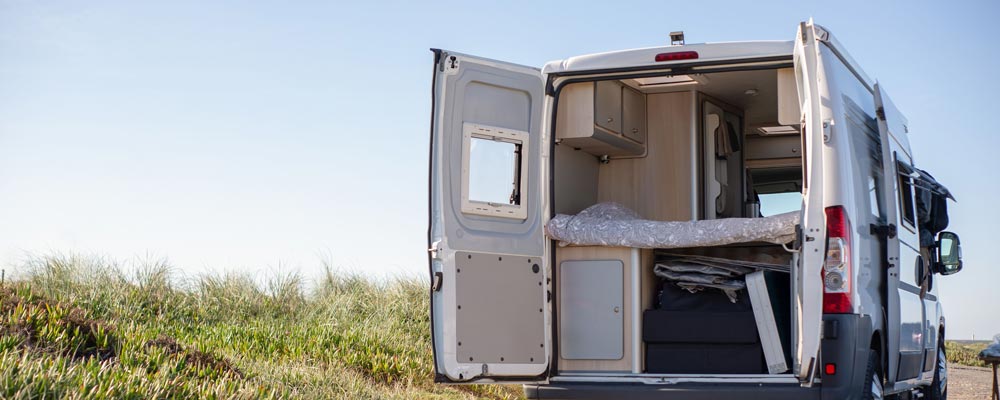
- Windows: At least two windows on one side of the main vehicle body, excluding the driver and passenger doors.
- Living accommodation access: A separate door providing access to the living area, rather than relying solely on the cab doors.
- Suitable roof: Either a high-top roof or a pop-top elevating roof.
A window fitted within the living accommodation door can count towards the window requirement.
These features help the DVLA determine whether the vehicle's appearance is consistent with its proposed motor caravan classification.
Interior Requirements
Inside, the vehicle must provide suitable facilities for living and sleeping.
These include:
- Seating and a table for use within the living accommodation.
- Sleeping facilities, which can include beds converted from seating.
- Permanently installed cooking facilities.
- Suitable storage, such as cupboards or lockers.
The equipment must be securely fitted within the living area, although the table may be removable.
It's important to remember that meeting these requirements doesn't automatically guarantee approval. The DVLA considers the vehicle's overall appearance and construction when making its decision.
New DVLA Motorhome Rules 2026 – How to Change Your V5C Logbook to Motor Caravan
If you've converted a van into a campervan and believe it meets the latest requirements, you can apply to have its registered body type changed.
You'll need to provide evidence demonstrating that the conversion is complete and that the vehicle meets the DVLA's criteria.
This includes a completed motor caravan conversion checklist, photographs of the interior showing the required living facilities, and exterior photographs showing the front, rear and both sides of the vehicle.
You'll also need to provide a photograph of the vehicle identification number (VIN) or chassis number.
The photographs should clearly demonstrate the permanent nature of the conversion, with the bed and table shown ready for use.
Once you've gathered the required evidence, you'll need to complete the appropriate section of your V5C logbook and send your application to the DVLA in Swansea.
In some cases, a vehicle inspection may be required before a final decision is made.
You can find the full application requirements and supporting documentation on the official DVLA motor caravan conversion guidance.
What Happens if the DVLA Won't Register Your Campervan as a Motor Caravan?
One common misconception is that a converted campervan cannot legally be used for holidays unless its V5C has been updated to show 'motor caravan'.
That's not necessarily the case.
The DVLA explains that a converted vehicle can still be used as a motor caravan even if its registered body type remains unchanged, provided the owner is satisfied that it meets the necessary internal requirements.
The body type recorded on the V5C is primarily used to describe the vehicle's appearance for identification purposes.
It doesn't automatically determine insurance classifications, speed limits or other legal requirements.
However, owners must still ensure their vehicles are roadworthy, appropriately insured and compliant with all relevant regulations.
Don't Forget About Vehicle Weight and Safety
While the new DVLA motorhome rules make the registration process more flexible, vehicle safety remains just as important.
Converting a van into a campervan involves installing additional equipment, furniture and living facilities, all of which add weight.
This can reduce the available payload, potentially affecting how many passengers and how much luggage, water and equipment the vehicle can safely carry.
The DVLA also reminds owners that any additional travelling seats and seat belts must be securely installed.
Whether you're undertaking a DIY conversion or commissioning a professional conversion company, it's essential to ensure that all modifications are carried out safely and that the finished vehicle remains within its permitted weight limits.

Do the New DVLA Rules Affect Existing Motorhome Owners?
If you already own a factory-built motorhome or campervan that's correctly registered, there's generally no need to take any action because of these changes.
The updated guidance primarily affects vehicles that have been converted into motor caravans and owners seeking to change the body type recorded on their V5C logbook.
For those considering a campervan conversion, however, the revised requirements could provide greater flexibility when planning the finished vehicle.
It's also encouraging news for anyone who has previously struggled to obtain motor caravan classification.
A Positive Step for the Campervan Community
Overall, the new DVLA motorhome rules for 2026 represent a welcome change for campervan enthusiasts.
Recognising pop-top roofs, removing the need for exterior graphics and awning bars, and allowing previously rejected applications to be reviewed should make the process more straightforward for some owners.
While the DVLA will continue to assess vehicles individually, the updated guidance offers greater flexibility for people who have invested time and money in creating their ideal campervan.
For anyone planning a conversion or revisiting an unsuccessful application, now is a good time to familiarise yourself with the latest requirements.
Find Your Next Motorhome or Campervan at Yorkshire Caravans & Motorhomes
Of course, not everyone wants to take on a campervan conversion project!
If you're looking for a ready-made home on wheels, our friendly team at Yorkshire Caravans & Motorhomes is here to help.
Based in Bawtry, near Doncaster, we offer a fantastic selection of new and pre-owned motorhomes and campervans, with options to suit everything from spontaneous weekend getaways to extended touring adventures.
Whether you're searching for a compact campervan that's easy to drive and park or a spacious motorhome with all the comforts of home, we'll help you find the right vehicle for your travels.
Browse our latest motorhomes and campervans online or visit our Bawtry showroom to see what's available.
Information correct as of 19th October 2026. Vehicle owners should always refer to the latest official DVLA guidance before making changes to their vehicle or submitting an application.