
Motorhoming off grid opens up a different way to explore and the latest generation of motorhomes and campervans is making it easier than ever.
For some, the perfect motorhome holiday means arriving at a fully equipped campsite, connecting the electric hook-up and settling in for the week. For others, the appeal lies in having a little more freedom.
A quiet overnight stop before heading into the hills. A weekend spent mountain biking in the forest. Waking up somewhere remote before pulling on your walking boots. Or simply travelling without needing an electric hook-up waiting for you at every destination.

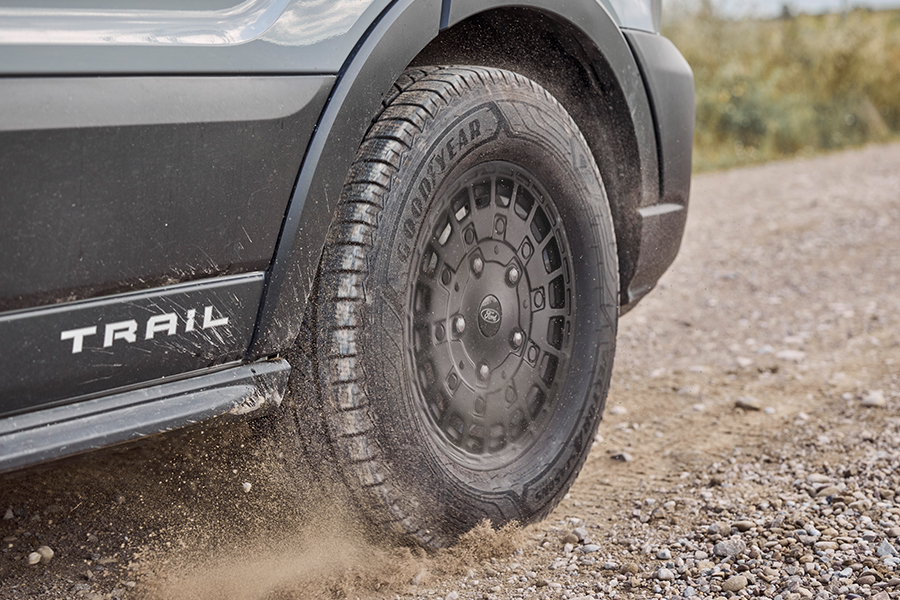
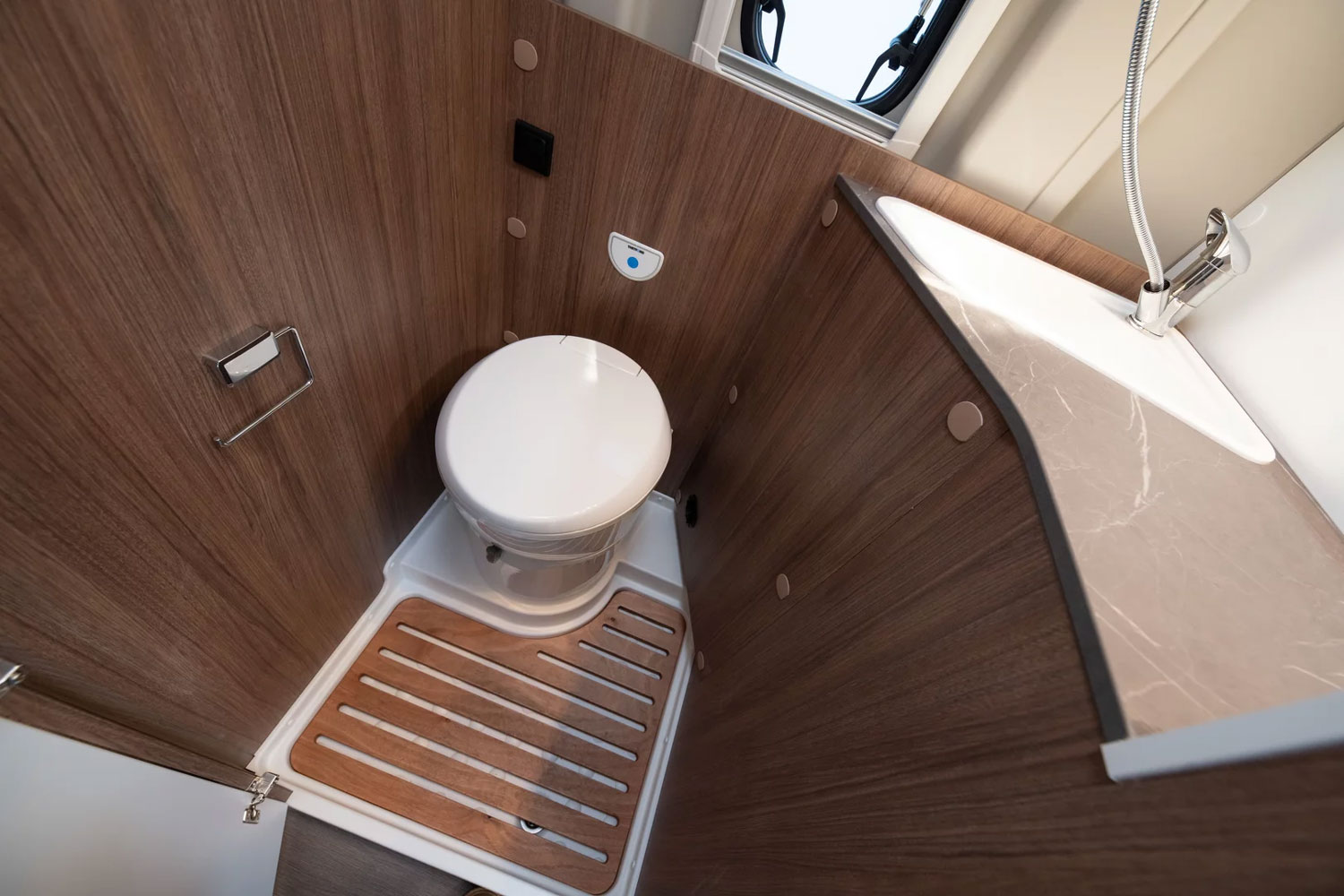
Solar panels, increasingly capable leisure batteries, onboard water, diesel heating and self-contained washrooms can all reduce your dependence on campsite facilities. Some of the latest campervans also look the part, with rugged styling, all-weather tyres and equipment designed with outdoor adventures in mind.
But what does going off grid in a motorhome actually involve? And which of the latest 2027 campervans and motorhomes are best equipped for it?
What does off-grid motorhoming actually mean?
First, let's clear up a common misconception. Going off grid doesn't have to mean wild camping.
In motorhome terms, "off grid" generally means spending time away from an electric hook-up and potentially away from some or all of the facilities you'd expect on a conventional campsite. That could be a remote campsite without electricity, a basic certified site, a farm stopover, an authorised motorhome aire or stopover, or another location where overnight stays are expressly permitted.
Your motorhome or campervan effectively becomes your own little base camp.
Instead of plugging into the mains, your leisure battery supplies your 12V systems, with a solar panel potentially helping replenish the energy you use. Fresh water is carried onboard, waste water is collected, and an onboard washroom means you're less dependent on external facilities. The better equipped your vehicle is, the longer you may be able to remain independent of a campsite, although even the best off-grid motorhome has limits.
Water runs out. Waste tanks fill up. Batteries need replenishing. Toilets need emptying.
True off-grid touring is therefore less about being completely self-sufficient indefinitely and more about giving yourself greater freedom between stops.
Why campervans are so well suited to off-grid adventures
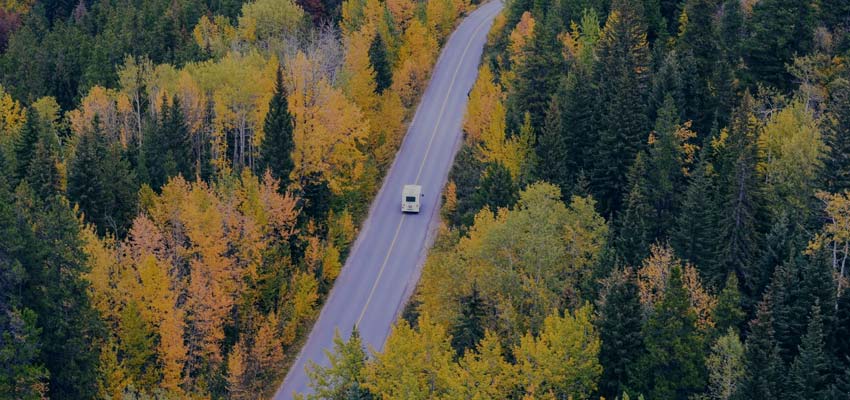
There's a reason we're increasingly seeing campervans photographed on mountain roads, forest tracks and beside lakes rather than neatly lined up on campsite pitches.
Their relatively compact dimensions can make them excellent bases for outdoor adventures.
You can head away for a weekend of walking, cycling or exploring and take your accommodation with you. Once you've finished, you've got somewhere warm to change, make some food and sleep before moving on the following morning.
For 2027 there are some particularly interesting options from Bailey, Ace and Elddis, all of which we sell here at Yorkshire Caravans & Motorhomes.
And if rugged adventure is what you have in mind, it's difficult to start anywhere other than Bailey.
Bailey Endurance: built with adventure in mind
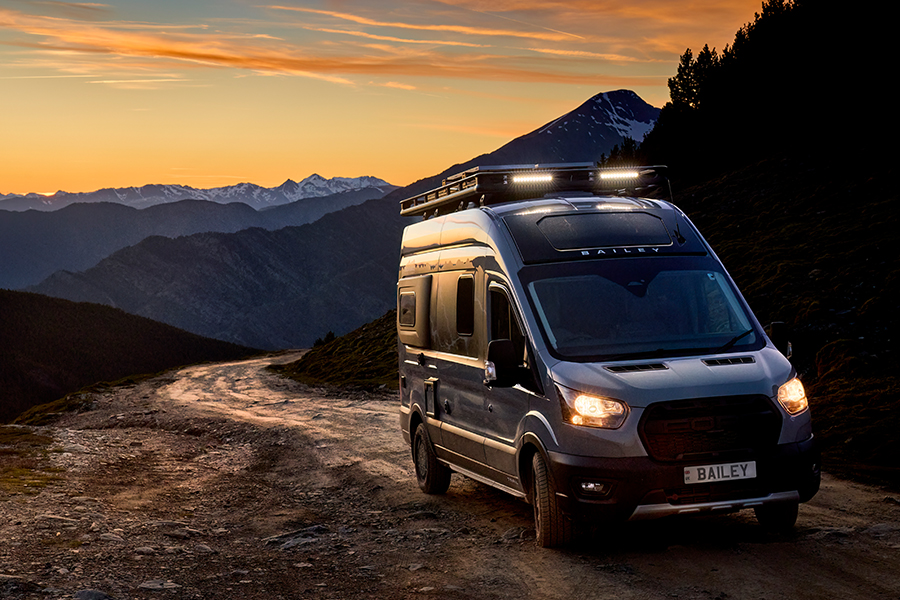
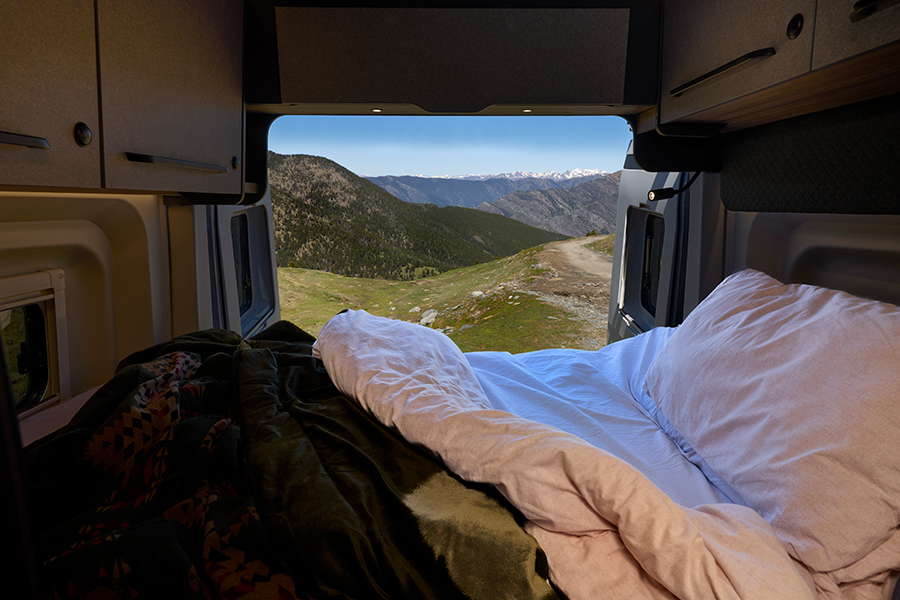
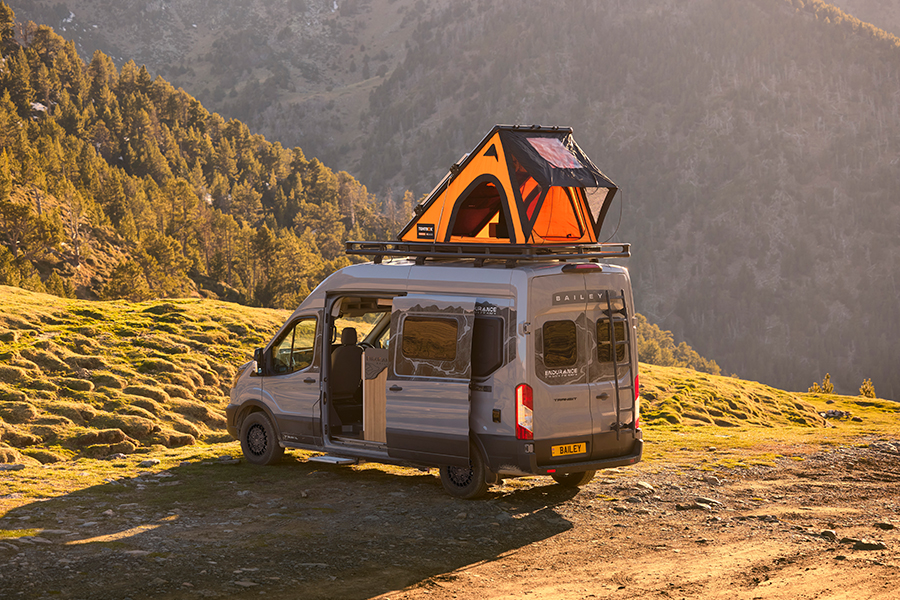
The Bailey Endurance certainly looks ready to get its tyres dirty.
Based on a Ford Transit platform, the six-metre Endurance features the distinctive Ford Trail grille, skid plate and bumpers together with all-weather tyres. Importantly, that doesn't turn it into an off-roader, but it does create a campervan clearly designed with more adventurous touring in mind.
It's also particularly interesting when we look at off-grid campervan equipment.
The 2027 Bailey Endurance comes with two 80Ah AGM leisure batteries and a 130W Truma solar panel as standard.
For owners who want to push the adventure theme further, Bailey offers an optional Adventure Pack, which includes two 100W solid Truma solar panels along with additional roof-mounted off-road lighting, a roof rack and ladder.
There's even the option of a roof-mounted TentBox, adding another dimension to the Endurance as a base for outdoor trips.
The E62 and E65 are both 3,500kg campervans and can be driven on a standard Category B licence. Both also use Truma Diesel Combi D4E heating and achieve Grade III EN1646-I for all-weather touring.
For mountain bikers, walkers and anyone whose idea of a good weekend involves muddy boots rather than a swimming pool and clubhouse, the Endurance makes a compelling proposition.
Bailey Endeavour: off-grid ability in a versatile campervan
If the Endurance is Bailey's more rugged-looking adventurer, the 2027 Bailey Endeavour takes a slightly different approach.
The current range consists of three six-metre, 3,500kg Ford Transit campervans, again driveable on a standard Category B licence.
More importantly for anyone researching an off-grid campervan, the Endeavour comes with a 150Ah lithium leisure battery as standard.
A 200W Truma flexible solar panel is available as a cost option, giving buyers the ability to increase the vehicle's off-grid capability if longer periods away from electric hook-up are part of their plans.
Lithium batteries are particularly interesting for this type of touring because they offer a different proposition to traditional AGM leisure batteries, including a greater usable capacity for a given rated capacity.
Add the Endeavour's Truma Diesel Combi D4E heating and it becomes a campervan that isn't restricted to summer adventures either.
Tested when the temperature really drops
"Off grid" often conjures images of sunshine and solar panels, but travelling independently in the UK can just as easily involve rain, frost and freezing temperatures.
Bailey has subjected the Endeavour to some serious cold-weather testing.
During climate-chamber testing, the campervan faced an external temperature of -15°C while maintaining an internal temperature of at least +20°C, achieving Grade III classification. Bailey tested the vehicle with the rooftop both up and down.
It wasn't left in the laboratory either.
In January 2024, Bailey took an Endeavour B62 campervan and Alora 69-4S motorhome from Bristol to the Dolomites, where they encountered real-world temperatures below -20°C.
For anyone considering year-round campervan adventures, that's a much more meaningful test than simply telling you the heater works.
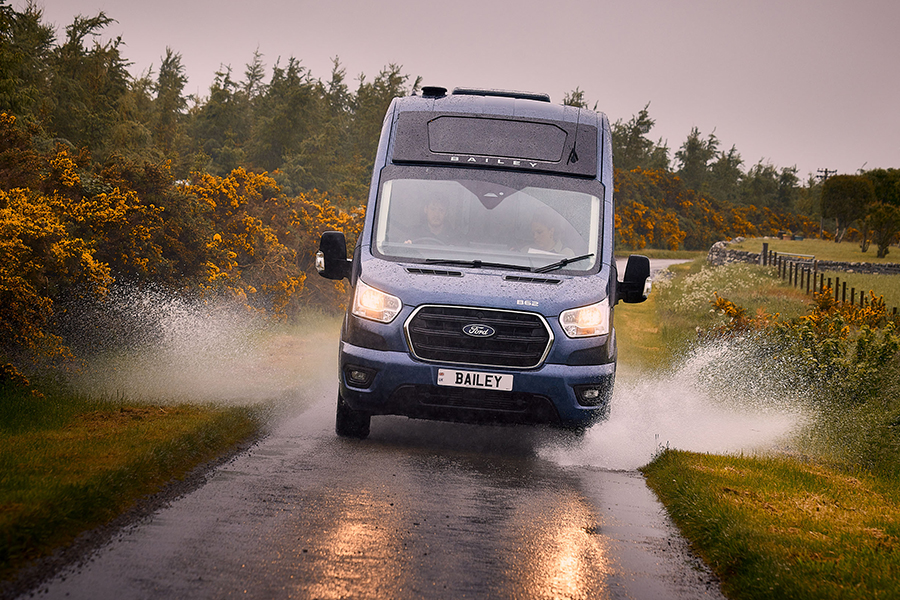


From the Sahara to the Dolomites: Bailey's appetite for adventure
Rugged-looking promotional photography is one thing. Bailey also has a history of taking its leisure vehicles on some considerably bigger adventures.
Its 2023 Sahara Challenge involved two Bailey Phoenix+ 642 caravans and an Adamo 75-4T motorhome undertaking a 19-day journey that took the team from Portugal into Spain and onwards to Morocco. The route crossed the Atlas Mountains before reaching the northern edge of the Sahara.
That particular expedition didn't involve the Endeavour or Endurance campervans, but it's a good illustration of Bailey's wider approach to putting its leisure vehicles through demanding real-world journeys.
Since then, the Endeavour has faced almost the opposite extreme, swapping the warmer landscapes of North Africa for temperatures below -20°C in the Dolomites.
Thankfully, motorhoming off grid in the UK doesn't normally require preparation for either extreme.
Ace 1200: another option for an off-grid campervan
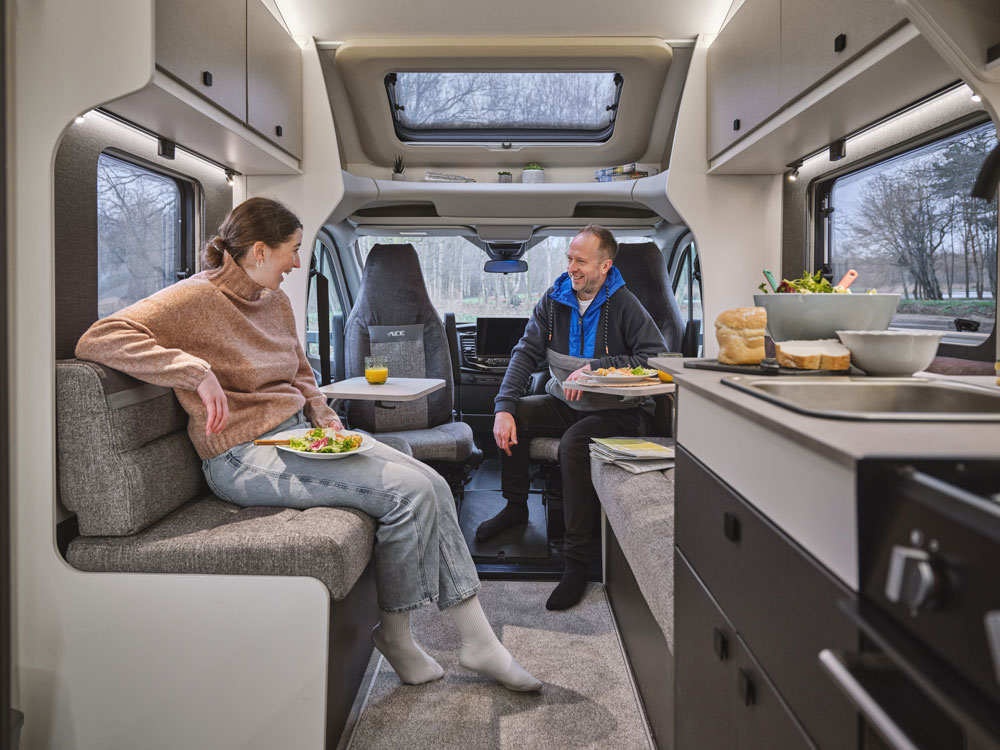
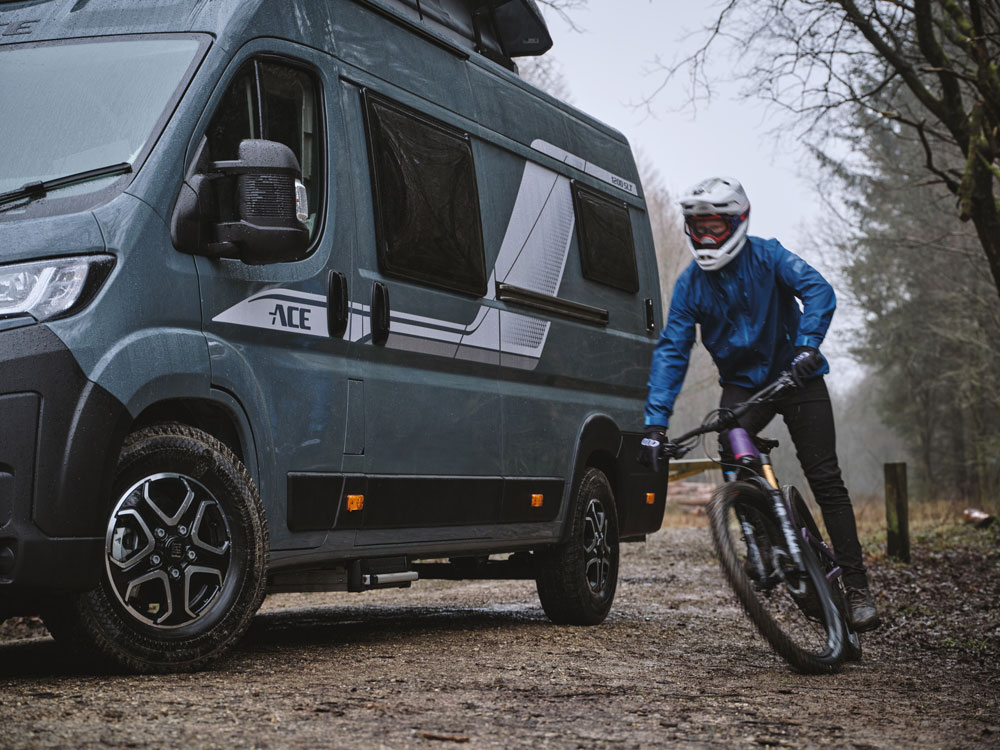
The 2027 Ace 1200 range offers another interesting route into campervan ownership, particularly for those who want something capable of being both an everyday vehicle and a base for weekends away.
There are multiple layouts available, including the new-for-2027 1200 GS, GST and RB.
Across the range you'll find a 100Ah lithium leisure battery, while Ace's Driver's Pack includes a 110W/130W solar panel alongside equipment including 16-inch black alloy wheels, rear reversing sensors and an electric Thule side entrance step.
Depending on model, the Ace 1200 can sleep between two and four people, with an elevating roof and pop-top bed available on selected layouts.
That flexibility makes it an interesting proposition for couples and families who don't necessarily want a large motorhome but still want to pack up and head away when the opportunity arises.

Elddis Autoquest GTV: self-contained touring for 2027
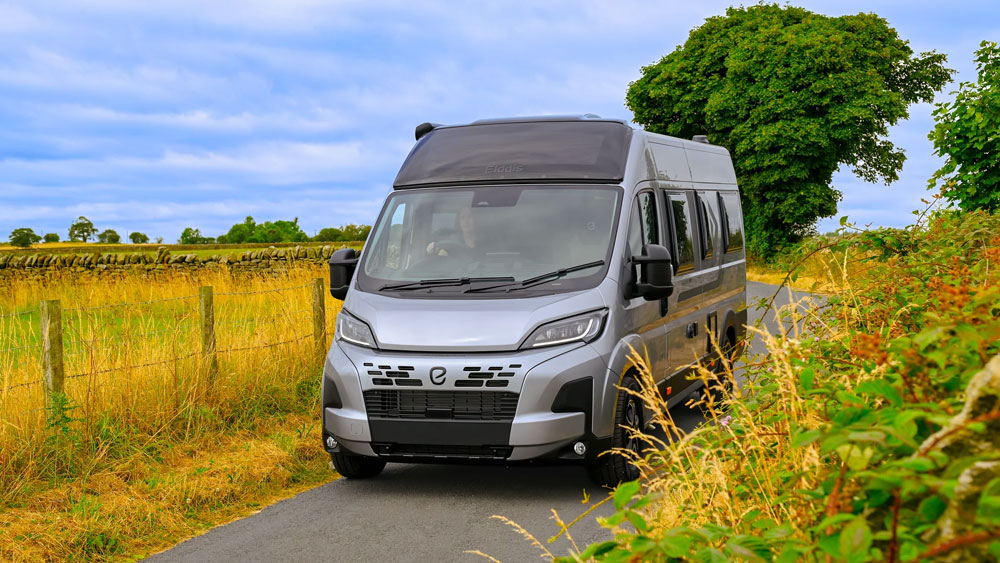
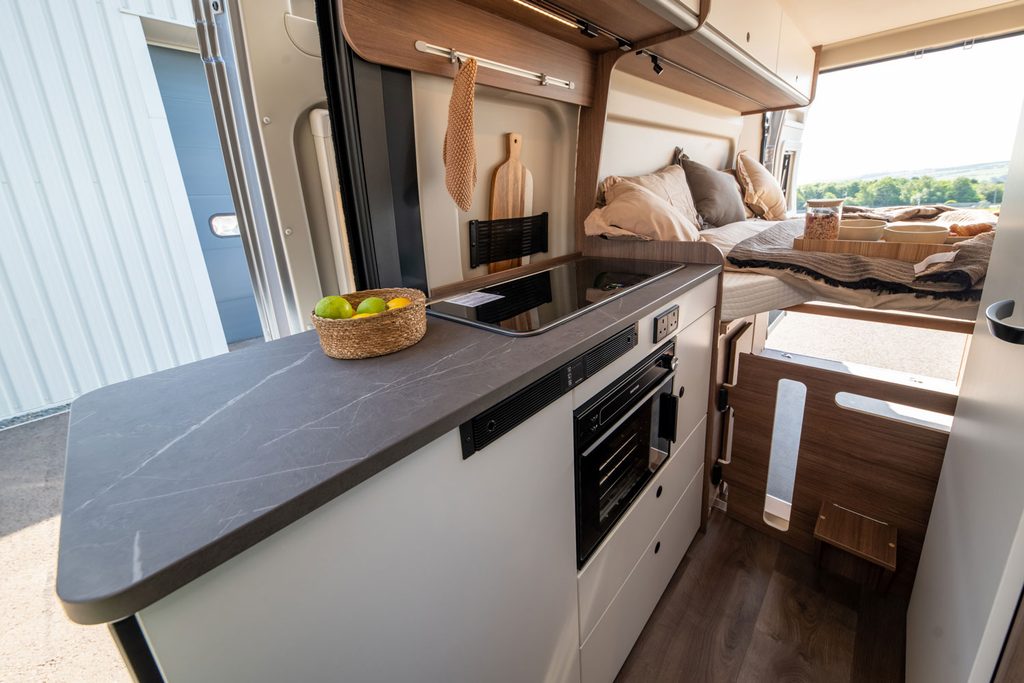
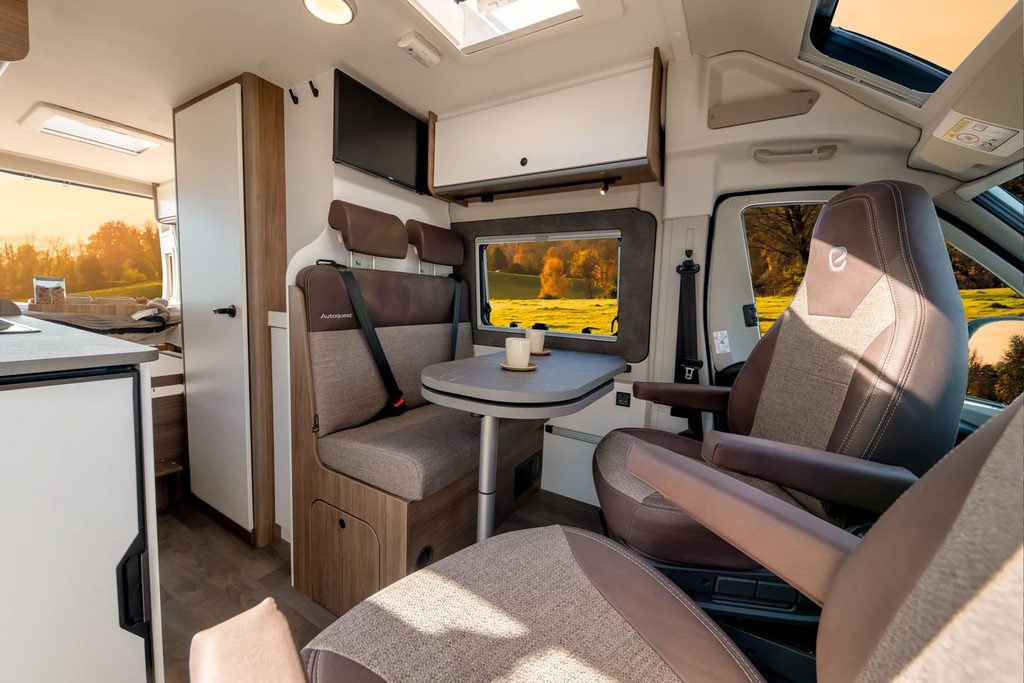
The 2027 Elddis Autoquest GTV range approaches the adventure from another direction.
There are five Fiat Ducato-based layouts – the GTV 260, 460, 554, 560 and 563 – giving buyers a choice of rear lounge and fixed rear-bed arrangements.
For off-grid touring, it's important to distinguish between what's fitted and what's possible.
The 2027 Autoquest GTV specification includes a 95Ah maintenance-free AGM leisure battery and pre-wiring for a solar panel. In other words, we wouldn't describe the GTV as having a factory-fitted solar panel as standard.
Where the GTV becomes particularly useful for self-contained touring is elsewhere in its specification.
There's a 100-litre fresh-water tank and 90-litre waste-water tank, together with an onboard washroom incorporating a toilet, shower and sink. Selected models also provide substantial rear garage storage, useful when your adventures involve carrying plenty of outdoor equipment.
A factory option for a two-bicycle carrier is also listed by Elddis.
It's a good example of why choosing an off-grid campervan isn't simply a matter of asking which one has the biggest solar panel.
What about a larger off-grid motorhome?
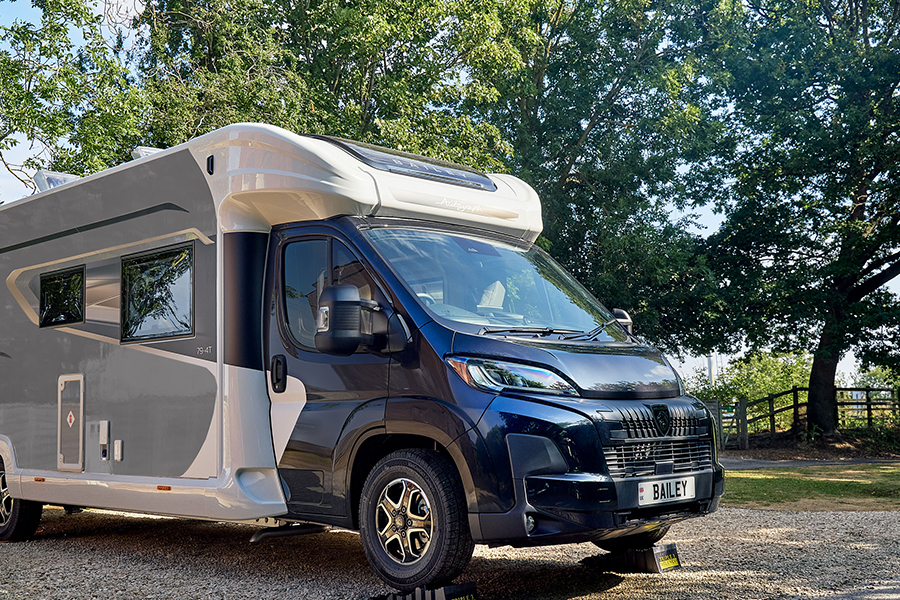
Campervans may be the focus here, but compact isn't compulsory. If you'd rather take considerably more living space with you, the Bailey Autograph demonstrates just how capable a larger motorhome can now be away from hook-up.
Bailey describes the current Autograph specifically as off-grid ready, fitting a 200W Truma solar panel and two 95Ah AGM leisure batteries.
It also provides 115 litres of fresh-water capacity and a 100-litre waste-water tank, while a factory-fitted Thule wind-out awning gives you an instant outdoor living area once you're pitched.
The trade-off is size. A six-metre campervan and an eight-metre motorhome provide very different experiences on narrow rural roads and in small parking areas.
But if your idea of off-grid touring is spending longer periods away while retaining the space and facilities of a larger motorhome, bigger can have its advantages.
How long can you stay off grid in a motorhome?
Unfortunately, there's no honest answer of "three days", "five days" or "a week".
It depends enormously on how you use your motorhome.
Two people conserving water and electricity in summer will have very different requirements from a family travelling in November with the heating running and multiple devices being charged.
Solar performance isn't constant either. A 200W solar panel doesn't mean you're receiving 200W throughout every daylight hour. Weather, season, shade, panel orientation and other factors all affect the energy generated.
Your limiting factor might not even be electricity.
You could have plenty of battery capacity remaining but need fresh water. Your waste-water tank could be approaching capacity. Your toilet cassette might need emptying.
Good off-grid touring therefore means understanding all of your resources rather than watching the battery gauge alone.
What do you need for an off-grid motorhome trip?
The vehicle is only the beginning.
Before heading away, think about power, water, waste, warmth, food, connectivity and what you're actually planning to do when you arrive.
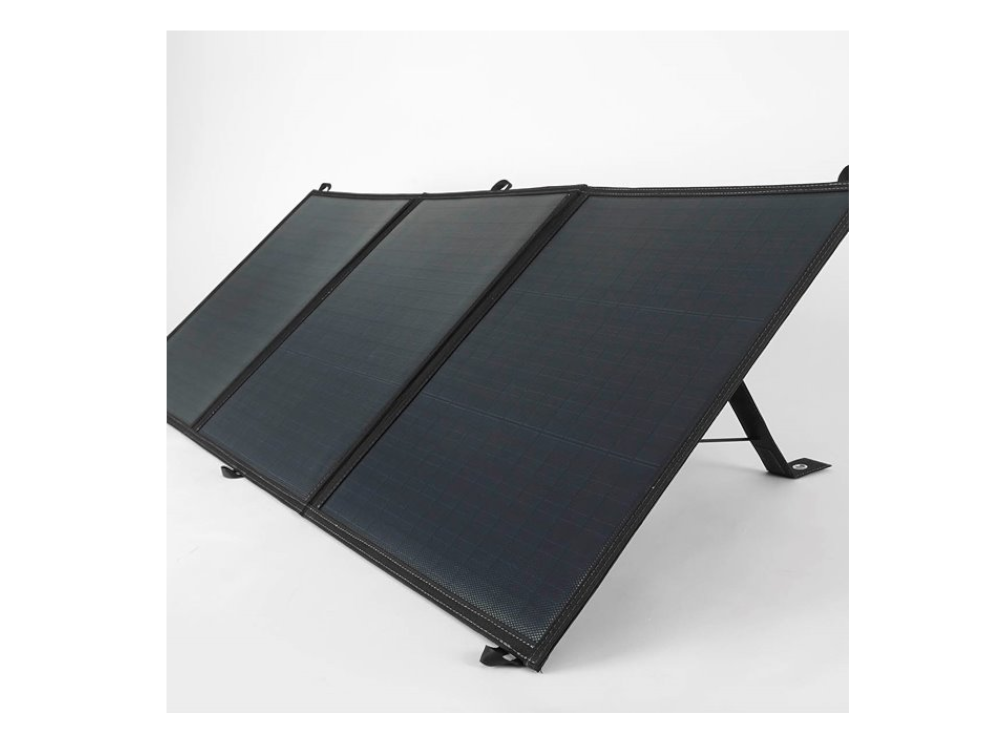
Solar panels and suitable leisure batteries can reduce reliance on electric hook-up, while portable power stations can provide another source of stored electrical energy for suitable devices.
Simple equipment matters too. Levelling ramps can make an enormous difference when your authorised overnight stop isn't billiard-table flat. Appropriate outdoor lighting, water containers and sensible storage can all make life easier.
And don't forget the adventure itself.
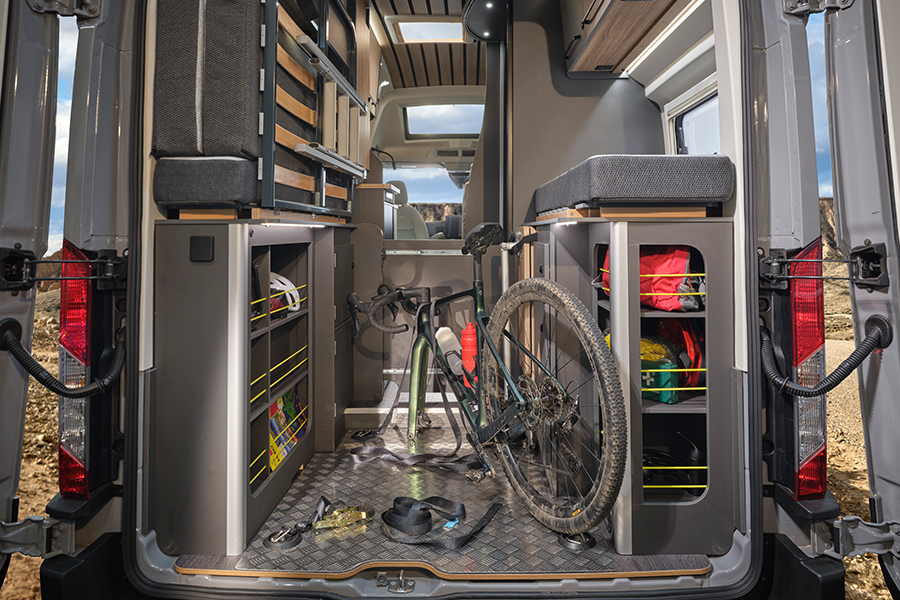
If the whole reason you've travelled somewhere remote is to spend the next day cycling, carrying the bikes safely is just as important as powering the campervan.
At Yorkshire Caravans & Motorhomes, our onsite Accessories Shop stocks equipment for touring and off-grid trips, including solar and portable power solutions. Our Aftercare team can also help with additions such as suitable bike racks and other touring equipment.

And if you want more room once you've reached your destination, our dedicated Awnings department can help you explore options for extending your usable living space.
The important thing is to build your setup around how you actually intend to travel, rather than buying equipment simply because it has "off-grid" written on the box.
Off Grid Doesn't Mean You Can Park Anywhere
This is probably the most important part of this guide.
Having an off-grid motorhome or campervan does not give you the right to camp or stay overnight wherever you choose.
"Wild camping" is also a potentially misleading term when talking about motorhomes.

Scotland is often assumed to have completely different rules because of its famous outdoor access rights. However, those access rights apply to responsible lightweight camping and do not extend to sleeping overnight in motorhomes, campervans, cars or other motorised vehicles. Motor vehicles are excluded from those access rights.
That doesn't mean Scotland is closed to adventurous motorhome touring.
For example, Forestry and Land Scotland operates its excellent Stay the Night scheme, through which self-contained motorhomes and campervans can legally spend a night at participating forest car parks. There are locations close to walking trails, mountain biking and some spectacular Scottish scenery.
In England, Wales and Northern Ireland, you should similarly never assume that being able to park somewhere means you're permitted to stay overnight.
Rules can be set by landowners, councils and car-park operators and restrictions vary from place to place. If you're parking on private land, obtain permission. Look for designated motorhome stopovers, campsites, authorised overnight parking and other places where your stay is explicitly welcomed.
Always check the rules applying to the specific place you're intending to stay before travelling.
That's the kind of off-grid motorhoming we encourage: adventurous, but responsible.

The Pros and Cons of Motorhoming Off Grid
Off Grid Advantages
More freedom
You're less dependent on finding a campsite with an available electric hook-up every night.
Getting closer to your adventures
Authorised rural stopovers can put you in a fantastic position for walking, cycling, photography and exploring.
Quieter locations
A small permitted stopover can offer a completely different experience to a large holiday park.
More spontaneous touring
A well-equipped campervan makes it easier to change plans and build a trip around the journey rather than one campsite.
Making more of your campervan
You don't have to save it for a two-week summer holiday. A spontaneous weekend away can be enough.

Off Grid Disadvantages
Your resources are finite
Water, battery capacity, gas and waste storage all need managing.
Solar isn't guaranteed
British weather doesn't always cooperate, particularly during winter when daylight hours are shorter.
Finding somewhere to stay requires planning
Off-grid capability doesn't remove the need to find a legal, appropriate overnight location.
Facilities may be limited
That's rather the point – but not everybody enjoys giving up the conveniences of a fully serviced campsite.
You need to be responsible for your waste
Grey water and toilet waste must be disposed of appropriately. Going off grid should never mean leaving anything behind.
Is an off-grid campervan right for you?
Perhaps the biggest misconception about off-grid campervans is that they're only for people planning epic expeditions. They aren't.
You might never cross the Atlas Mountains or experience -20°C in the Dolomites.
Your adventure might simply be loading two bikes into the van on Friday afternoon, driving somewhere beautiful, staying at an authorised rural stopover and waking up ready for the trails on Saturday morning.
And that's really the appeal.
Modern campervans such as the 2027 Bailey Endurance, Bailey Endeavour, Ace 1200 and Elddis Autoquest GTV give you different ways of becoming less reliant on traditional campsite infrastructure. Move into a larger motorhome such as the Bailey Autograph, and substantial battery, solar and water capacity can provide even greater independence while retaining considerably more living space.
The key isn't finding a motorhome that promises you can disappear indefinitely. It's finding one that gives you enough independence to travel the way you want to travel.

At Yorkshire Caravans & Motorhomes in Bawtry, you can explore our latest Bailey, Ace and Elddis motorhomes and campervans, ideal for Motorhoming Off Grid. Talk to our team about the way you intend to use your vehicle, and look at the equipment that could help you make more of your time away.
Because sometimes the best-equipped campsite isn't where the adventure is.
Sometimes, you want to go a little further.